
The premium vehicle as an asset class
Recurring rents, residual value, decorrelation: why the premium vehicle is now regarded as a tangible asset within a wealth allocation.
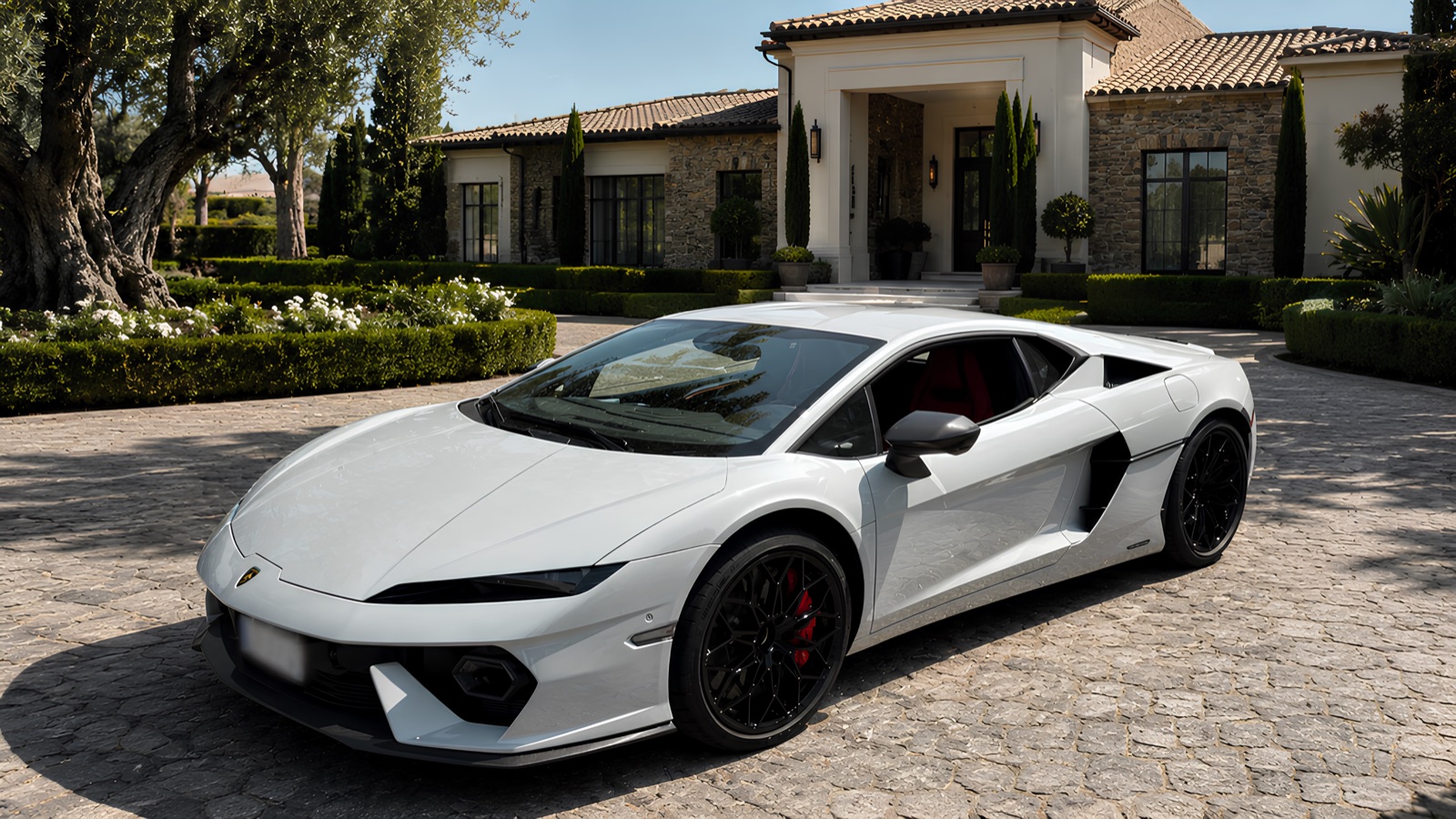
For a long time, the automobile was filed under liabilities. A vehicle is bought, driven, worn down and resold at a loss: depreciation seems to be its only law. Yet part of the market escapes this fate. For some fifteen years, research houses have applied to rare cars the rigour once reserved for equities or real estate — indices, long time series, risk ratios. And the moment you add to the equation not merely resale value, but the income generated by renting the car out, the premium vehicle ceases to be a pure object of consumption. It can be analysed as a twin-engine tangible asset: a steady stream of income and an exit value. That leaves the question that decides everything: which vehicles are we really talking about? For between the object that depreciates and the one that appreciates, the line is sharp.
The tangible asset: what paper cannot give
A real asset differs from a financial asset in one simple respect: it possesses an intrinsic value, independent of any counterparty's promise to pay. A share is worth only what the market is willing to pay for it; an exceptional automobile retains a materiality — mechanical, historical, cultural — that no credit default can erase. From this materiality flow two virtues sought after by asset allocators.
The first is a relative decorrelation. The returns of collector cars maintain weak correlations with other asset classes, which makes them a genuine diversification factor. Academic work bears this out: over the long run, the segment posts a Sharpe ratio of around 0.35, higher than that of the S&P 500 (0.21) or the MSCI World index (0.16) — while remaining, in all honesty, below gold and government bonds (0.40). The second virtue is a form of resistance to inflation, an asset in finite supply having historically served as a store of value. Over nearly twenty years, the Knight Frank Luxury Investment Index sums it up: one million dollars indexed to this basket in 2005 was worth 5.4 million at the end of 2024, against 5 million for the same sum invested in the S&P 500. The order of magnitude is worth pondering, without being set up as a rule.
What the indices say — and what they leave unsaid
The measurement of this asset class owes a great deal to HAGI, the Historic Automobile Group International, founded in 2007 by Dietrich Hatlapa, a former executive of the bank ING Barings. Its proprietary database aggregates more than 100,000 transactions and has, since 2008, fed a family of indices published monthly — including a "Top Index" of the fifty most sought-after models, regularly cited by the Financial Times and the Wall Street Journal. Over ten years, the collector-car segment has risen, according to Knight Frank, by some 185%.
Honesty, however, demands that the other side be laid out. After a bull cycle, the market corrected: the collectors' index gained only 1.2% in 2024, while the overall luxury index fell by 3.3%, before remaining almost flat in 2025 (−0.4%). The asset class is therefore neither linear nor guaranteed; it has its cycles. Above all, holding costs — storage, maintenance, insurance, transaction — trim the gross return by 25% to 50% depending on the estimates. An index measures a market trend, not the net performance of a given investor.
Not every vehicle is an asset: use versus rarity
Here is the cardinal distinction, the one every serious investor must grasp before anything else. The vast majority of automobiles are vehicles for use: they lose 20% to 30% of their value in the very first year, and up to half over five years. No financial engineering reverses this slope; to call them assets would be a misnomer.
At the opposite end, a minority of vehicles — limited production, sporting heritage, lasting desirability — resist depreciation, or even appreciate. Examples abound: a Ferrari 488 Pista was worth around 6% more a year after its launch; the Porsche 911 GT3 and GT3 RS frequently trade above their list price; a 911 S/T listed at $291,650 when new was resold for between $623,000 and $800,000. Conversely, a prestigious but mass-produced model follows the same downward slope as any everyday vehicle.
The dividing line comes down to one word: rarity.
Below a few hundred units, backed by a competition record and a desirable marque, the law of supply and demand is inverted. Confusing the two categories is the costliest mistake there is — and the very one that commercial literature too often keeps alive.
The twin engine: recurring rent and exit value
Real-asset theory sheds light on the model. Such assets carry two components of return: a regular income, comparable to a coupon, arising from long-term contracts; and a capital appreciation, tied to rarity and demand. The first stream does not depend on market sentiment, but on the asset's actual use; the second, on its value at the end of the cycle.
The premium automobile placed under long-term rental with or without a purchase option follows precisely this pattern. The recurring rent constitutes the first engine — an operating stream backed by a contract, paid whether the stock markets rise or fall. The residual value at the end of the contract constitutes the second. It is their combination that makes sense: a sought-after model — a Ferrari SF90, a Ferrari Roma Spider, and more broadly the world of GT & sports cars — pairs strong rental power with contained depreciation, sometimes nil on the most coveted series. Total return then comes down neither to rent alone nor to resale alone: it is born of their sum. It is this income/value pairing that must structure the selection of a fleet — it being understood that no return can be promised in advance.
Co-investment: pooling access and expertise
Owning a productive exceptional automobile outright requires three resources rarely brought together: capital, time and expertise. Capital, because models with contained depreciation trade at high tickets. Time, because a physical asset must be stored, maintained, insured and marketed — frictions that account for most of the gap between gross and net return. Expertise, finally, because buying the right example, at the right price, with the right provenance, cannot be improvised.
Co-investment answers these three obstacles by pooling access to a fleet managed by professionals. The investor gains exposure to the asset class without bearing its operational burden alone; they share a stream of rents and an exit value, where individual ownership would expose them to a risk concentrated on a single asset, illiquid by nature. This is the spirit of the model championed by EVO LUXURY: to align investors' access with a premium fleet selected for its rent/value pairing, without turning a rigorous management discipline into a promise of performance.
What place in an allocation?
The answer comes down to one word: satellite. Passion investments — automobiles, watches, art — do not form the core of an estate, but a diversification pocket, sized accordingly. Knight Frank's Wealth Report 2025 observes that the great fortunes continue to devote a share to them, with renewed interest in assets of strong materiality and provenance after two years of correction — the same report noting that nearly half of the family offices surveyed intended to increase their exposure to real assets.
Three reservations to keep in mind
- Illiquidity: a physical asset cannot be sold in a single trading session; the time to exit is a variable, not a certainty.
- Costs: holding, insurance and management weigh on the net return, always lower than the gross figure displayed by the indices.
- The absence of any guarantee: neither future rent nor exit value is contractually secured.
It is precisely because these limits are real that rigour of selection, quality of management and transparency take precedence over any figured projection.
In short
The premium vehicle is not, on its own, an asset class. The vehicle for use depreciates, inexorably; only the rare, desirable and well-managed vehicle can combine rental income and exit value to the point of deserving the status of tangible asset. Thought of in this way — as a satellite pocket, weakly correlated, backed by a real asset and an operating income — it finds a legitimate place in a demanding reflection on wealth. Provided one never confuses the automotive dream with the discipline of the investor.
Investing carries a risk of capital loss. Past performance is not indicative of future results. The indices and data cited relate to the collector-vehicle market and constitute neither a guarantee of return nor personalised investment advice.