
AI and monthly photos: predictive maintenance arrives
AI-analysed monthly photos: how predictive maintenance catches damage at the earliest stage and protects the residual value of a premium fleet.
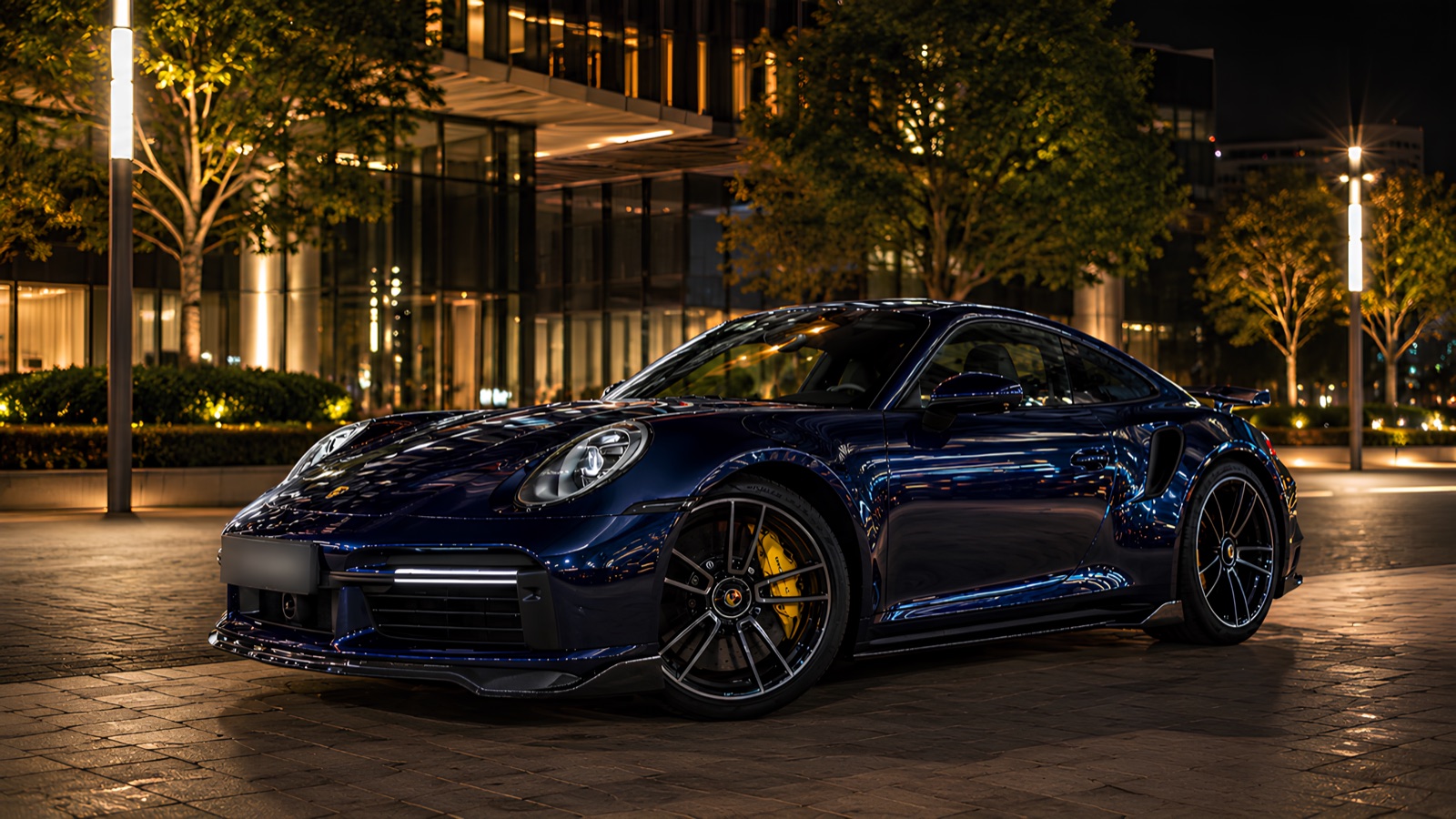
Every month, an EVO LUXURY client receives a discreet notification: a few photos of their vehicle, taken in good light, sent in a matter of seconds. The gesture seems trivial. Yet it carries one of the most profound shifts in high-end vehicle management. For behind these snapshots, a computer-vision system observes, compares and measures. The point is no longer to wait for the impact or the breakdown, but to spot the faint signal — the paint chip, the hairline crack, the first trace of corrosion — before it turns into a cost. This is the principle of predictive maintenance. Long confined to heavy industry and aviation, it is now making its way into the upkeep of prestige vehicles, redefining how they hold their value.
From reactive upkeep to predictive maintenance
Historically, vehicle maintenance has followed two logics. The first, reactive, repairs once the failure has occurred: it is the most expensive and the most disruptive. The second, preventive, schedules work at fixed intervals — every X kilometres or X months — whether it is needed or not. Predictive maintenance opens a third way: acting at the right moment, on the basis of the vehicle's actual condition, measured continuously rather than assumed.
The economic gap is well documented. Work by McKinsey, widely cited across the industry, shows that predictive maintenance cuts maintenance costs by 18 to 25%, reduces unplanned downtime by up to 50% and extends equipment life by 20 to 40%. A repair carried out early typically costs four to five times less than the same job handled under emergency conditions. On an industrial scale, Deloitte puts the cost of unplanned downtime alone at some fifty billion dollars a year. Small wonder that the vast majority of organisations adopting a predictive approach report a positive return on investment.
The question is no longer "when will the part fail?" but "what does the data say about its condition today?"
Computer vision: what AI reads in an image
Computer vision is the branch of artificial intelligence that teaches machines to interpret the content of an image. Trained on vast volumes of bodywork photographs, it detects and classifies scratches, impacts, cracks and paint defects with a speed and consistency no manual inspection can match: analysing a single shot takes only a few seconds, and the model never tires, never loses focus and applies the same standard to every vehicle.
The accuracy levels reported are high. A 2024 study cites accuracy reaching 90% on the detection of surface and structural damage, while specialised solutions claim 95 to 99% across dozens of distinct parts. In one particularly demanding case — corrosion — deep-learning models achieve 96 to 98% pixel-level accuracy, matching or even surpassing the human eye. In practice, the algorithm picks out the chipped clear-coat, the hairline crack or the first spot of rust long before they would strike an untrained eye.
A powerful technology, but a demanding one
That performance comes with one condition: image quality. A blurry, underexposed or backlit shot sharply degrades the analysis. This is why standardising the way photos are taken — framing, lighting, consistency — is no cosmetic refinement: it is what makes the measurement reliable and, above all, comparable from one month to the next.
The monthly photo: a time series, not an isolated shot
The real breakthrough lies not in a photo, but in its repetition. A single image describes a state; a monthly sequence describes a trajectory. By comparing each new shot with those before it, the system builds the visual equivalent of what telematics achieves with engine sensors: continuous condition tracking, or condition monitoring.
In instrumented fleets, models continuously analyse temperature, vibration, pressure and fuel consumption to flag an emerging failure 2 to 8 weeks before the breakdown, with 85 to 95% accuracy in linking an anomaly to its likely outcome. The monthly photo carries this philosophy over to everything sensors cannot see: bodywork, wheels, glazing, visible wear, surface condition. This is precisely the approach EVO LUXURY applies by asking clients for a regular image of their vehicle, analysed by AI to bring out drift — the slow, almost imperceptible shift — before it ends in an incident. The value lies not in the isolated pixel, but in the trend it reveals.
Catching it early: why a few weeks change everything
Damage is almost never static. A mere chip in the clear-coat lays the metal bare; moisture seeps in; corrosion sets in and spreads; the repair, at first cosmetic and localised, becomes structural and costly. Detecting it at the right moment means acting while the fix is still simple, quick and inexpensive — before the problem spreads.
Fleet data shows just how much is at stake. An unplanned breakdown costs on average close to $1,900 on a commercial vehicle, once repair, lost operation and roadside recovery are added together. Predictive programmes cut the frequency of such events by 65 to 75%, not least because AI identifies the majority of failures several weeks in advance, allowing a scheduled workshop visit rather than an emergency call-out — three to five times more expensive. On an exceptional vehicle, where every painted panel and every forged wheel represents substantial value, this logic of early detection matters even more. Whether it is a premium SUV exposed to loose gravel and tight manoeuvres, or a Porsche 911 Turbo S whose bodywork accounts for a large share of its value, the gap between "seen in time" and "seen too late" quickly runs into thousands of euros.
Protecting residual value, the core of the long-term rental with or without a purchase option model
In long-term rental with or without a purchase option, the residual value — what the vehicle is worth at the end of the contract — forms the very foundation of the economic balance. Anything that preserves it protects the fleet's profitability and, in turn, the terms offered to the client. And a vehicle's documented condition weighs heavily at the remarketing stage, the final step of the life cycle, where the aim is to maximise the value recovered.
Auction houses apply markdowns of 3 to 12% to vehicles whose history or condition is incomplete, uncertain or impaired. Conversely, a continuous visual record — a monthly, time-stamped trace of the vehicle's actual condition — becomes a genuine asset: it attests to the care taken, clarifies liability in the event of a dispute and reassures the final buyer. For a prestige saloon or an Audi RS6 performance, a few points of residual value represent significant sums, and the maintenance history is an integral part of the price. The monthly photo is thus not merely a maintenance tool: it is an instrument of wealth preservation, as valuable to the fleet manager as to the driver keen to return a flawless vehicle.
Neither magic nor autopilot
It would be dishonest to present AI as infallible. Its accuracy depends on image quality, and every statistical model produces its share of false positives and false negatives alike. Computer vision assists judgement; it does not replace it.
The right setup is therefore hybrid. The algorithm sorts, measures and prioritises at scale — a task impossible to perform by hand across an entire fleet — while the human expert then validates, contextualises and decides on the action. It is this combination, not blind automation, that delivers detection that is both early and reliable. Data informs the decision; it does not take it over.
A discipline, not a gimmick
Predictive maintenance is not a futuristic promise: it is a proven, measured discipline whose benefits — fewer breakdowns, controlled costs, preserved value — are extensively documented across the industry. Applied to prestige motoring, it turns a very simple habit — photographing your vehicle every month — into an instrument for protecting value, to the shared benefit of the client, the fleet manager and the asset itself. At EVO LUXURY, this standard reflects a straightforward conviction: the best maintenance is the kind that gets ahead of the problem. To see early is to protect for the long term.