
Prestige SUV: presence, versatility and serenity
The prestige SUV has established itself as the company car of European executives: commanding driving position, versatility, presence and serenity — a closer look through the lens of long-term rental with a purchase option.
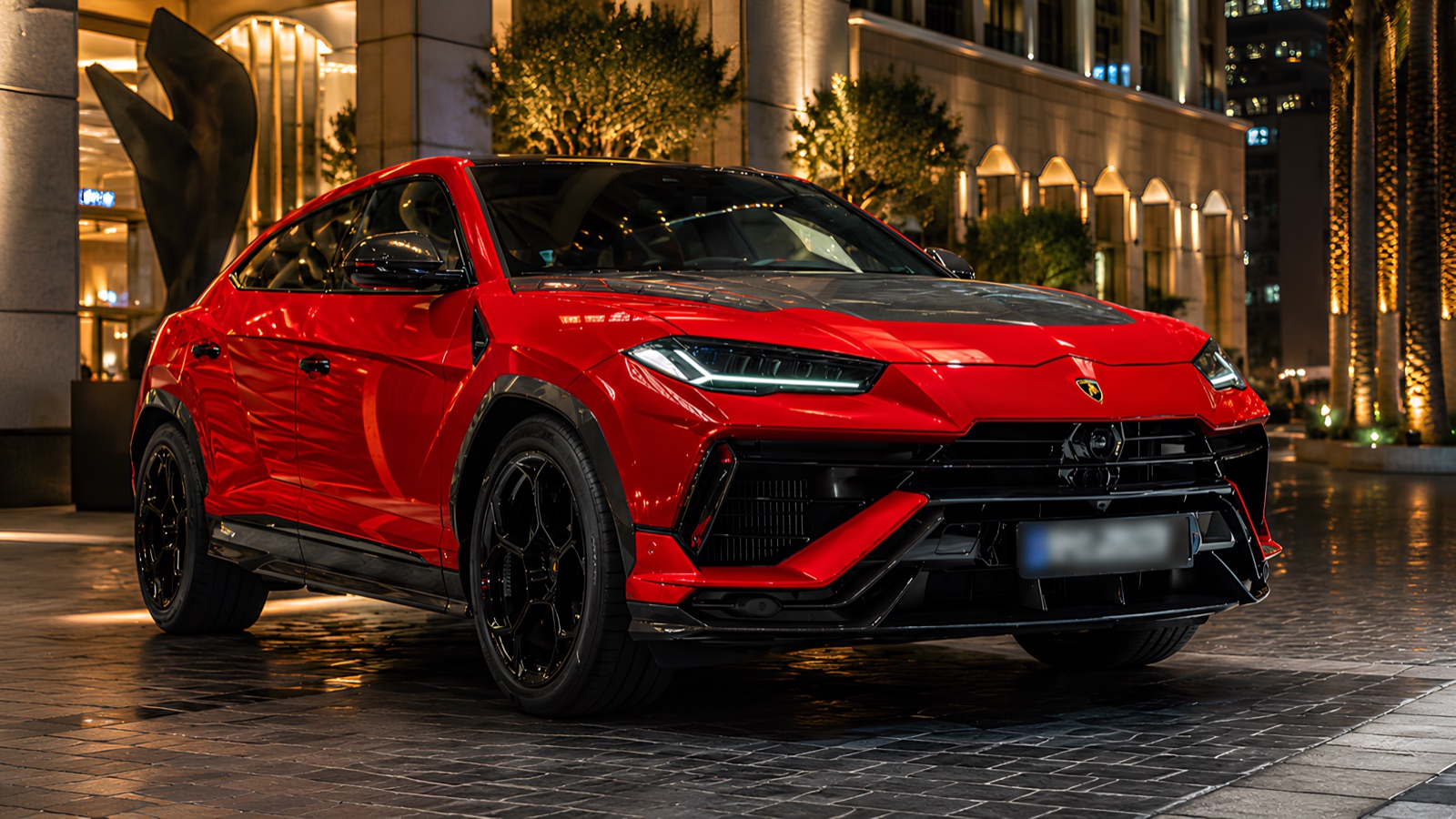
There is a moment, on the forecourt of a corporate headquarters or beneath the canopy of a grand hotel, when the car speaks before the person driving it. For a long time, that role fell to the executive saloon — a low, hushed silhouette, the implicit code of European power. That era is over. In less than fifteen years, the prestige SUV has overturned the hierarchy of company cars and installed itself, quietly but without rival, in the spaces reserved for senior executives. This is neither an aesthetic whim nor a passing fashion: it is a deep, measurable and lasting shift, one that answers very concrete expectations — to see the road from above, to carry everything, to command a presence and to drive with peace of mind. A closer look at a choice that has become almost self-evident, and at the logic that makes it all the more relevant under long-term rental with or without a purchase option.
A market shift, not a mere fashion
The figures confirm what intuition had already sensed. In 2025, SUVs account for roughly half of new-car sales in the European Union, according to the ACEA — a share that would have seemed inconceivable at the turn of the 2010s. In the world of luxury, the shift is more pronounced still: SUVs now make up more than 53% of the European luxury-car market, according to Mordor Intelligence. In other words, when a wealthy client chooses a premium car in Europe, there is a better-than-even chance they will opt for a raised model.
The phenomenon is anything but trivial in economic terms. The global luxury-SUV market is estimated at around 240 billion dollars in 2025, with Europe capturing close to a quarter of it, and Germany remaining the continent's leading market for automotive luxury. These orders of magnitude say one thing: the prestige SUV is no longer a niche aimed at lovers of wide-open spaces, but the beating heart of the premium segment. For an executive, choosing such a vehicle is not a gamble — it means joining the upper standard of a mature, liquid and deeply established market. Which, as we shall see, changes everything when it comes to weighing its use and, for those who wish, its eventual ownership.
The driving position: the power of the gaze
Ask an executive what won them over, and the answer rarely rushes to the spec sheet. It speaks of the seat. An SUV's elevated driving position offers a wider field of vision, an anticipated reading of the traffic and a sense of control that the saloon, crouched close to the tarmac, cannot provide. Analysts of buying behaviour confirm it: this commanding position — the dominant view over the road — ranks among the very first reasons for preference, because humans assess risk intuitively and feel safer when they visually dominate their surroundings.
There is something almost anthropological here. To sit high, to take in the whole scene at a glance, to decide early: these are the gestures of command transposed to driving. For anyone shuttling between airports, head offices and meetings, this ease is no cosmetic refinement — it lightens the mental load of the wheel and turns the journey into a decompression chamber rather than an ordeal.
The saloon is driven; the SUV is commanded. The distinction is not merely semantic — it is postural, and power has always been a matter of posture.
A single vehicle for all of an executive's lives
An executive's day is never linear. The same vehicle must reach a board meeting at dawn, absorb three colleagues and their luggage at midday, head for a second home on Friday evening, then take the family onto mountain roads at the weekend. It is precisely this elasticity of use that the prestige SUV resolves better than any other body style.
Interior space, boot volume, ground clearance, all-wheel drive, the ability to swallow motorway, urban cobbles and snow-covered tracks without compromising on refinement: the premium SUV melds into a single silhouette what once required two or three separate cars. This versatility largely explains why affluent buyers are forsaking saloons and coupés in favour of models capable of carrying children and equipment in the same weekend.
For a company car, the argument is decisive. An executive does not want to arbitrate between representation and practicality, between Monday's image and Saturday's freedom. The prestige SUV spares them that choice: it is, literally, the vehicle that forces them to give up nothing.
Presence: a silent grammar of status
An executive's car communicates before any conversation. And on this ground, the prestige SUV commands a vocabulary the saloon handles poorly: verticality, surface, controlled mass, that way of occupying space without aggression. Studies of purchase motivation are explicit — the SUV projects qualities of capability, assurance and solidity that the low silhouette struggles to express. On both sides of the Atlantic, it has become the new status symbol of those who have succeeded.
This presence is not ostentation. Today's executive shuns the flashy; they seek a quiet authority, a self-evidence. The high-end SUV offers it through its proportions and the quality of its finish rather than through noise. Parked outside a head office, it signals success without shouting it; it inspires confidence in the other party even before the handshake.
That said, presence comes in dialects. It can be hushed and British, sculptural and Italian, or technical and Germanic — three dialects of one language, chosen according to the image one intends to project.
Perceived safety and everyday serenity
Beyond image, the SUV answers a more intimate need: to feel safe. Perception plays a central role here. Thanks to their size and height, SUVs are spontaneously associated with better protection, and this conviction weighs heavily in the decision. It is no accident that, in the world of executive close protection, the SUV remains the reference vehicle: reassuring mass, high seating, an enveloping cabin.
One must be precise: perceived safety does not mechanically coincide with measured safety, and the best modern SUVs combine the two thanks to ever more complete driver-assistance packages. But for an executive whose time and mental availability are the scarcest resources, this feeling of serenity has a value of its own. To drive at ease, to arrive fresh, to know one's loved ones well protected: this peace of mind is an integral part of what one acquires with a prestige SUV. It is, ultimately, the true luxury — the kind that cannot be seen.
Residual value and the intelligence of long-term rental with a purchase option
There remains the question every shrewd manager asks last: what is the vehicle worth at the end of the road? On this point, the premium SUV benefits from solid second-hand demand, carried by the market's structural appetite for this body style. At the heart of the segment, the best models post retention rates markedly higher than those of comparable luxury saloons. The nuance deserves to be stated honestly: some very large high-end grand tourers depreciate quickly, and not all residual values are equal. But overall, the raised car withstands time better than its three-box cousin.
This is where long-term rental with or without a purchase option reveals all its elegance. During the rental phase, it is not the executive who carries the depreciation risk but the operator, and a solid residual value keeps a later purchase within reach. It translates not into a hypothetical resale gain, but into a more favourable monthly payment — since the payment finances precisely the gap between the purchase value and the buy-back value. The executive captures the advantage without shouldering the uncertainty: they turn a potentially depreciating asset into a predictable, tax-legible cost of use — with no tied-up capital, no resale to manage, and the freedom to become the owner at the end. To discover the premium SUVs available for long-term rental with or without a purchase option is precisely to access the best of both worlds.
Three SUVs that embody this standard
One and the same need, three answers with character. The Ferrari Purosangue — Maranello's first interpretation of the genre — proves that an SUV can have the soul of a supercar: sculptural presence, exceptional engineering, absolute rarity. At the other end of the expressive spectrum, the Bentley Bentayga S cultivates the hushed authority of great British luxury, where the refinement of the cabin prevails over demonstration. Between the two, the Porsche Cayenne GTS embodies the Germanic synthesis: dynamic rigour, flawless versatility, controlled presence — arguably the archetype of the executive company SUV.
Three grammars of a single idea: to see high, to carry everything, to assert without shouting. It is for each to choose the dialect that resembles them.
A choice that has become self-evident
If the prestige SUV has established itself in the reserved bays of corporate headquarters, it is not through mimicry. It is because it resolves, in a single silhouette, the equation of the contemporary executive: the commanding position that soothes, the versatility that frees, the presence that asserts, the serenity that protects and a value that holds over time. Long-term rental with or without a purchase option perfects this logic by making it flexible, predictable and free of any capital lock-up. Today's executive can treat a car as a service — a vehicle working for their image, their comfort and their time — and still choose to own it in the end. The premium SUV, under long-term rental with or without a purchase option, is the most accomplished form of that idea.